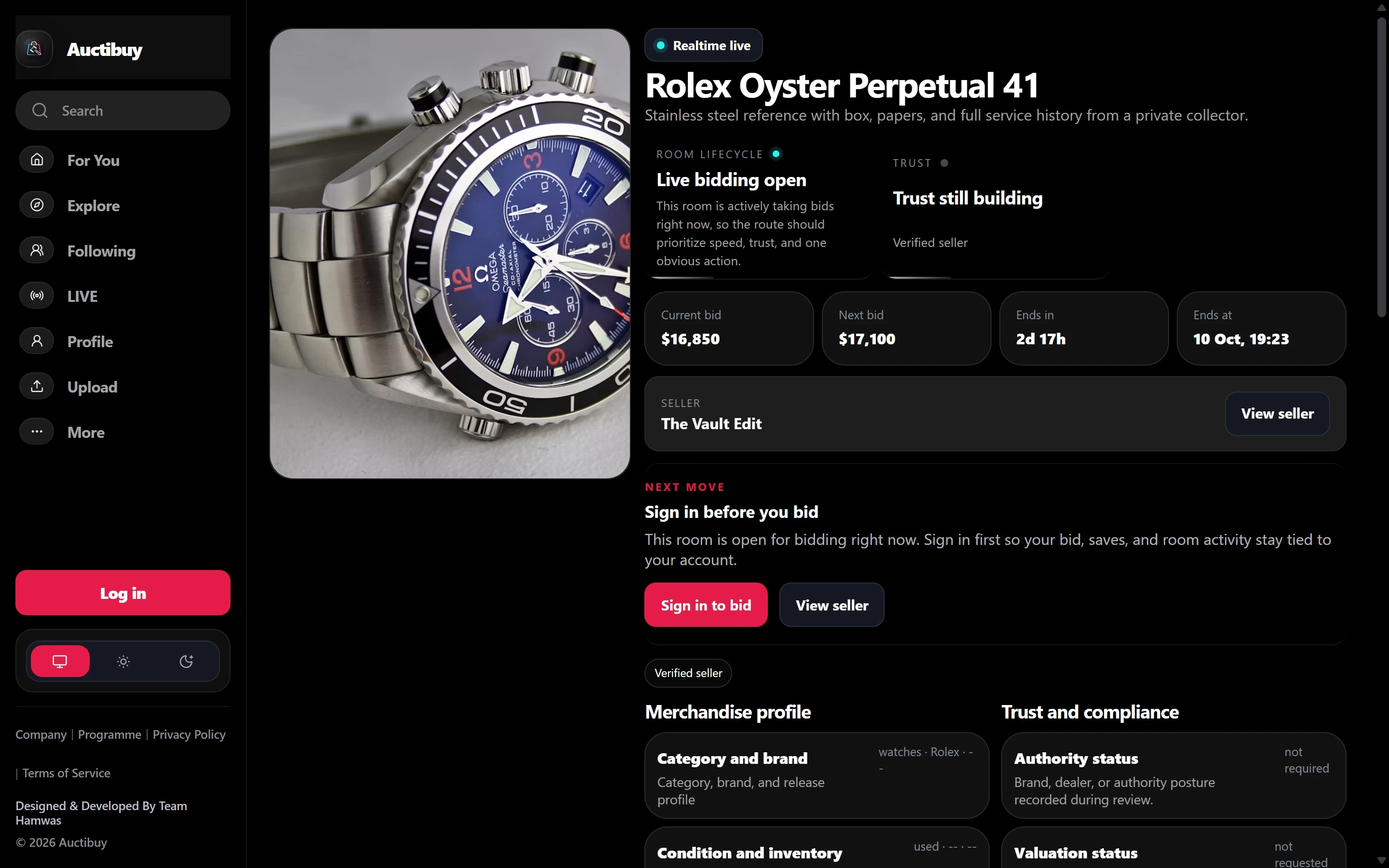
A live auction can look like a small screen: an item, a price, a clock, and a button. The difficult part is making sure every person sees the same answer.
The room has more than one visitor
Auctibuy has a feed and an Explore area for buyers. It also has a creator studio, account tools, moderation screens, and operations around settlement. Those people do not need the same controls, but they still depend on the same auction state.
A buyer might open a room from an item page. A seller might be watching the listing from a different screen. An administrator may be checking the same auction from an operations view. If those screens disagree about the current bid, trust disappears quickly.
The database gets the final say
The browser can show a quick update, but it should not decide whether a bid is valid. Auctibuy keeps the auction record in MongoDB as the source of truth. The API checks the current room before it accepts a change. That protects the important action even when two people click at nearly the same time.
Redis helps carry hot room state and events. WebSockets deliver updates while the connection is healthy. Polling remains available when the live connection drops. The fallback is less exciting, but it is useful: a person should still be able to understand the room when the best connection is unavailable.
The interface should explain the state
Real-time work is not only a transport problem. The screen needs to answer simple questions:
- What is the current price?
- Can I bid right now?
- Did the server accept my action?
- What changed while I was looking away?
The next useful improvement is to test those questions on a slow connection and during a connection change. The goal is not to make the room feel busy. The goal is to make the important state hard to misunderstand.